Memory care is a type of long-term care community designed to meet the specific needs of individuals with a dementia diagnosis, like Alzheimer’s disease or another form of dementia. Memory care facilities offer 24-hour care and supervision, secured environments, specialized staff trained in dementia care, and memory-enhancing activities and therapies. Memory care can take place in apartment-like facilities, within a wing of an assisted living facility, or in smaller residential care homes. The goal of memory care is to provide an engaging, safe, and therapeutic environment for seniors with dementia to support their well-being and improve their quality of life. Individuals in the middle to later stages of dementia benefit most from a memory care environment.
Memory Care Architecture and Design: A Human-Centered Approach
Learn how human-centered design helps support memory care residents’ cognitive function.
Memory Care Classes and Staff Training
Understand the kinds of dementia care training and certifications memory care staff typically receieve.
As dementia progresses, seniors will likely need assistance with one or more activities of daily living (ADLs), such as eating, bathing, dressing, toileting, incontinence care, and moving about. Memory care staff are trained to provide help with ADLs based on each resident’s abilities.

Amenities
50+ Memory Care Activities That Keep Seniors Active and Engaged
Read the full article

Services
What Is Person-Centered Care for Dementia?
Read the full article
Memory Care vs. Nursing Homes: What’s the Difference?
Learn how memory care facilities and nursing homes differ in costs, services, and programming, and how to make the best …
Independent Living vs. Memory Care: What’s the Difference?
Learn the distinctions between these two settings as you consider senior living options for a loved one with dementia.
The median national cost of memory care is $6,200 per month, according to proprietary data gathered by A Place for Mom. Costs vary greatly between communities and depend on factors like location, community amenities, programming, apartment size, and the level of care a senior requires. Pricing models also vary. For instance, some memory care communities may be all-inclusive, while others may use an a la carte approach and charge based on services required by a resident.
Memory care base costs typically cover rent, utilities, meals and snacks, housekeeping, transportation to medical appointments, on-site activities, nonmedical therapies, and shared amenities. However, some amenities — such as in-unit internet service, beauty and barber services, laundry, and pet accommodations — may cost extra.
While many families look to savings to finance senior care, there are other little-known funding sources that can help. The articles below can help you better understand pricing and the options available to help pay for memory care.

5110 19th Avenue, Brooklyn, NY 11204
4.2 (36 reviews)
See details

112-50 72 Avenue, Forest Hills, NY 11375
4.7 (101 reviews)
See details

333 West 86th Street, New York, NY 10024
4.4 (137 reviews)
See details

CARE OPTIONS
Assisted Living vs. Memory Care: 5 Key Differences
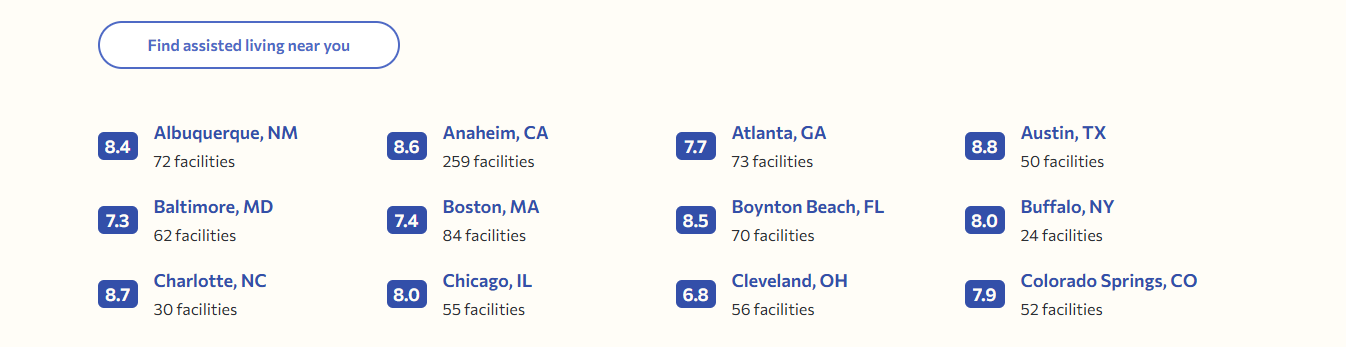
The score shown is the overall experience rating which is an average of the reviews submitted for those communities. The overall experience rating is a star rating that ranges from 1 being the lowest to 5 being the highest.
Below are the 51 largest cities grouped by their metropolitan area.
The information contained on this page is for informational purposes only and is not intended to constitute medical, legal, or financial advice or create a professional relationship between A Place for Mom and the reader. Always seek the advice of your health care provider, attorney, or financial advisor with respect to any particular matter, and do not act or refrain from acting on the basis of anything you have read on this site. Links to third-party websites are only for the convenience of the reader; A Place for Mom does not endorse the contents of the third-party sites